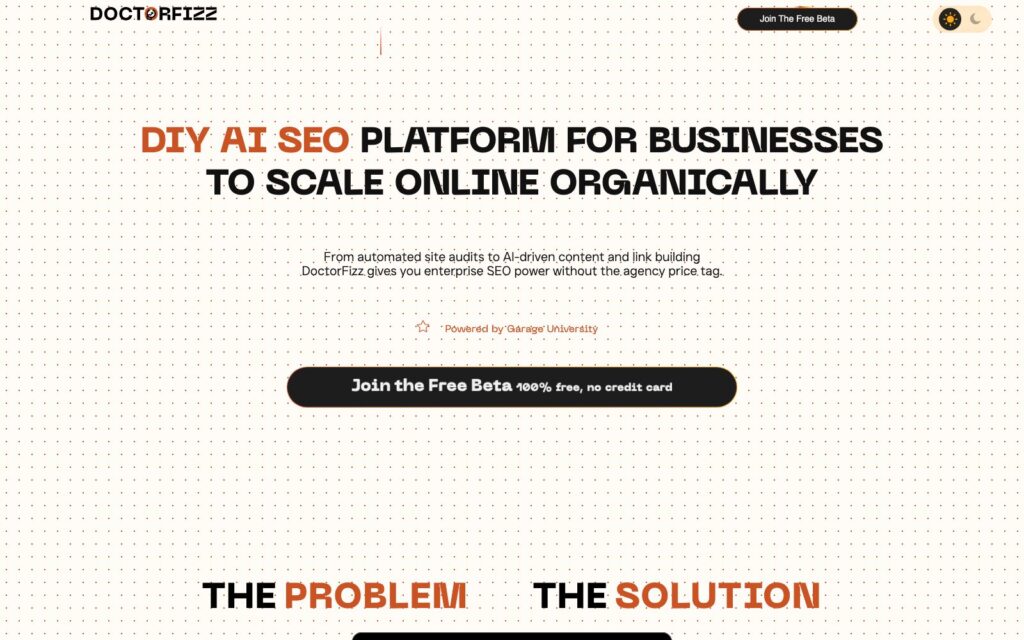
DoctorFizz
SEO and AI search audit SaaS, built end to end.
I'm Paras, a freelance full stack developer based in India. I build custom web apps and SaaS on Next.js or the MERN stack: logins and roles, dashboards, APIs and background jobs, deployed on Vercel or a VPS. My Custom Web App plan starts at ₹2,49,999 and takes 8 to 12 weeks, with a written scope first.
You get a working web app, live on Vercel or a VPS, with logins, roles, dashboards and APIs, built on Next.js or the MERN stack. Before any code there is a written scope, and after the final payment the code is yours.
The Custom Web App plan covers:
Key screens are designed by my team. I build, deploy and support the app, and you deal with me the whole way. Not included: hosting and third-party API costs, which are billed at actual cost.
It is for businesses whose work no longer fits a spreadsheet, a plugin or a per-seat SaaS tool, and for founders who want their own product. If you only need a website or a store, this plan is more than you need. Good fits:
Not sure yet? A 5 to 8 page business site is ₹59,999, covered on my WordPress developer page, and stores are covered under ecommerce website development. My guide to what a website costs in India shows where each rupee goes.
Custom web apps start at ₹2,49,999 and take 8 to 12 weeks. The final price comes from the written scope, so you see it before you pay anything.
| Item | Cost | How it is billed |
|---|---|---|
| Build (Custom Web App plan) | From ₹2,49,999 | 40% to start, 40% at a midway milestone, 20% at handover |
| Hosting (Vercel or a VPS) | At actual cost | Paid to the provider, in your name where possible |
| Third-party APIs (email, AI, data) | At actual cost | Paid to the provider, in your name where possible |
| Support | First 30 days included | Then monthly or per task, quoted for your app |
GST is extra if applicable. Payments go through Razorpay, so UPI, cards and netbanking all work. The 8 to 12 weeks start once the first payment, your content and the logins I need are in, and late feedback moves the date by the same amount. If you cancel before a milestone's work has started, that milestone's payment is refunded in full.
A call, a written scope, then the build in milestones you can check on a staging link. After the first 40%, each payment follows work you have seen.
I build DoctorFizz, a SaaS, end to end at the digital agency where I work, and I built the Itzfizz Helpdesk on the MERN stack. Each one raised a question your scope should answer too.
DoctorFizz compares a client's page with the top Google and Bing results and the sources AI answers draw on. A real audit is slow, so every audit is a job. The API saves it in MongoDB and returns an ID at once, and a Python worker in Docker does the crawling and reporting in the background. The Playwright crawler renders JavaScript, so it reads a page the way a visitor sees it. Next.js and MongoDB, on Linux servers.
Itzfizz Digital wanted its own helpdesk instead of paying per seat for a SaaS tool. In the Itzfizz Helpdesk, an email to the support address becomes a ticket through SendGrid Inbound Parse or an IMAP poller, and replies thread back by reference number. Seven roles, from admin to client, are checked on every API route, so a client sees only their own tickets and never the internal notes. React, Express and MongoDB Atlas, deployed to Vercel with the API as a serverless function.
More client sites and apps are on my work page.
Hire a freelancer when the scope is clear and you want to talk to the person writing the code. Hire an agency when you need several developers in parallel from week one. Build it yourself, or with AI tools, to test an idea before anyone's data depends on it.
I see both sides. I work full time at a digital agency, where I build DoctorFizz, and I freelance alongside it. An agency can put more people on a project at once and cover for someone on leave. With me you get one developer plus my design team, written updates, a staging link you can open any time, and no account manager in between.
ChatGPT or a no-code tool can get a demo running quickly. It struggles with the parts users never see: checking roles on the server, keeping slow jobs out of the request, handling an API that fails. Code an AI tool writes needs the same review as anyone else's.
Pick Next.js when the app also has public pages that should rank on Google. Pick a separate Express API, the classic MERN setup, when the API is its own service, like the Helpdesk.
Both are React and JavaScript end to end, with MongoDB in my builds. Next.js keeps pages and API routes in one project. For hosting, Vercel fits apps that work in short requests, and a VPS fits long jobs and headless browsers, like the DoctorFizz workers. Your scope names the stack and the reason before any code is written.
Ask for a written scope, a rupee price with a payment schedule, and a live app with real logins. Then check these points:
Ready to talk? Book a discovery call from the plans page or send your idea through the contact form. I reply within one working day with questions and a written quote.
A short call about your goals, then a written quote with scope and timeline.
Pay the advance on Razorpay. Invoice and kickoff form follow within one working day.
I map every page first, my design team draws the key screens, and we review them together.
I build on a private staging link you can check any time.
You approve and pay the balance. I launch and support you for 30 days.
With me, a custom web app starts at ₹2,49,999, plus GST if applicable. The final price comes from a written scope, so you see it before paying anything. Billing is 40% to start, 40% at a midway milestone and 20% at handover. Hosting and third-party API costs are billed separately, at actual cost.
Usually 8 to 12 weeks on the Custom Web App plan. The clock starts once the first payment, your content and the logins I need are in. If feedback or content arrives late, the date moves by the same amount, and the written scope says so from day one.
It can write code and text quickly, but it does not check its own work. Ask it for sources and some links will lead nowhere, so everything it writes needs checking. A working app still needs someone to decide where roles are checked, how slow jobs run and what happens when an API fails.
Yes, once the final payment is made. You own the code written for your project and all the content you supplied. Open source libraries and third-party services keep their own licences. Hosting and API accounts are set up in your name where possible, so you can move to another developer later if you want.
Both use React and JavaScript, so the choice is about structure. I pick Next.js when the app also has public pages that should rank on Google, and a separate Express API when the API is its own service, as in the Itzfizz Helpdesk. Your written scope names the stack and the reason before any code is written.
Yes. A web app runs in the browser on phones, tablets and laptops, so one build covers all three. If people want it on their home screen, it can install as a PWA, which is how my own product Quitward works, offline craving tool included. This plan is for web apps that run in the browser.
The first 30 days after launch are included: fixing bugs in my work and helping your team use the app. After that, I can handle updates, fixes and new features on a monthly plan or per task, quoted for your app. Hosting and API costs stay separate, billed at actual cost.
Secure checkout · Razorpay
